Guide · 8 min read
30 Turkish phrases to learn before visiting Türkiye
You can travel around Türkiye with English, gestures and a translation app. But a handful of Turkish phrases changes the whole trip. Shopkeepers smile, prices become friendlier, taxi drivers start chatting and grandmothers in villages suddenly want to feed you. Turks are proud of their language and they genuinely love it when a visitor tries, even with mistakes.
 Fatih Koçoğlu · Turkish teacher
This guide gives you the 30 phrases I would teach a friend the week before their flight. They are grouped by situation, each one links to its own lesson with audio, and you will find short video lessons from my YouTube channel along the way. Learn five a day and you will be ready in less than a week.
Before you start: how Turkish sounds
Good news first: Turkish is written exactly as it is spoken. Every letter has one sound, and there are no silent letters. A few letters need attention. C sounds like the English j in "jam", so "cami" (mosque) is "jah-mee". Ç is "ch" and Ş is "sh". The dotless ı is a relaxed "uh" sound, and ğ is almost silent; it just makes the vowel before it longer. Stress usually falls on the last syllable, which gives Turkish its gentle, rising melody.
Do not worry about grammar for now. Every phrase below is a fixed expression you can use as one block, like a key that opens a door.
1. The everyday magic words
These eight phrases will carry most of your interactions. Say Merhaba when you walk into any shop, café or taxi. Use Teşekkür ederim for thank you, or the quicker Sağ ol when things are relaxed. Lütfen means please, and Pardon is for squeezing past people on a crowded tram.
- Merhaba!mehr·hah·bahHello!Listen
- Teşekkür ederim.teh·shehk·kewr eh·deh·reemThank you.Listen
- Sağ ol!sah ohlThanks! (casual)Listen
- Lütfen.lewt·fehnPlease.Listen
- Pardon!pahr·dohnExcuse me!Listen
- Buyurun.boo·yoo·roonHere you go. / Please, come in.Listen
- Rica ederim.ree·jah eh·deh·reemYou're welcome.Listen
- Özür dilerim.ur·zewr dee·leh·reemI'm sorry.Listen
Buyurun deserves a special mention. You will hear it constantly: when you enter a shop ("welcome, how can I help?"), when a waiter puts food in front of you ("here you are") and when someone opens a door for you ("after you"). You do not need to say it much yourself, but understanding it makes everything clearer.
▶ Video lessons



2. Greetings by time of day
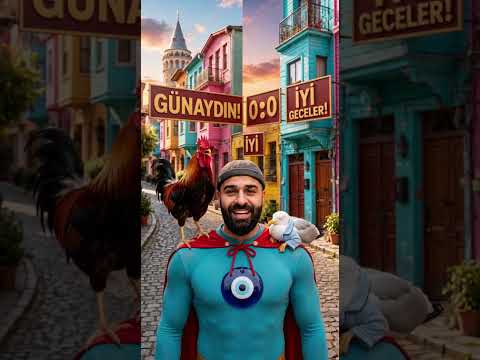
Turks like to greet according to the time. Günaydın is good morning until about noon. İyi günler is the all-day polite greeting and goodbye. İyi akşamlar is for the evening, and İyi geceler is only for saying good night when you part or go to bed. When you leave, say Hoşça kalın; the person who stays will answer Güle güle.
- Günaydın!gew·nai·duhnGood morning!Listen
- İyi günler!ee·yee gewn·lehrHave a nice day!Listen
- İyi akşamlar!ee·yee ahk·shahm·lahrGood evening!Listen
- İyi geceler!ee·yee geh·jeh·lehrGood night!Listen
- Hoşça kal!hohsh·chah kahlGoodbye! (said by the one leaving)Listen
- Güle güle!gew·leh gew·lehBye! (said by the one staying)Listen
A small tip: when someone says "Hoş geldiniz" (welcome) to you in a hotel or someone's home, the expected answer is "Hoş bulduk". It is a tiny thing, but it shows you know the rules.
3. When you don't understand
Nobody expects you to understand fast Turkish. These phrases save you in every conversation. Anlamadım means "I didn't understand", and Türkçe öğreniyorum (I'm learning Turkish) works like a password: people immediately slow down and smile.
- Anlamadım.ahn·lah·mah·duhmI didn't understand.Listen
- Tekrar eder misin?tehk·rahr eh·dehr mee·seenCan you repeat that?Listen
- Yavaş konuşur musun?yah·vahsh koh·noo·shoor moo·soonCan you speak slowly?Listen
- Türkçe öğreniyorum.tewrk·cheh uy·reh·nee·yoh·roomI'm learning Turkish.Listen
- İngilizce biliyor musun?een·gee·leez·jeh bee·lee·yohr moo·soonDo you speak English?Listen
4. In cafés and restaurants
Tea is the heartbeat of Türkiye. You will be offered çay in shops, offices and even at the bank. To call a waiter, never shout or snap your fingers. Say Bakar mısınız? (would you look?) and raise your hand a little. When the food arrives you will hear Afiyet olsun, the Turkish "bon appétit". At the end, ask for the bill with Hesap lütfen.
- Bakar mısınız?bah·kahr muh·suh·nuhzExcuse me! (calling the waiter)Listen
- Su alabilir miyim?soo ah·lah·bee·leer mee·yeemCan I have some water?Listen
- Çok lezzetli!chohk lehz·zeht·leeIt's delicious!Listen
- Hesap lütfen.heh·sahp lewt·fehnThe bill, please.Listen
- Afiyet olsun!ah·fee·yeht ohl·soonEnjoy your meal!Listen
If you are vegetarian or do not eat spicy food, learn "Vejetaryen yemeğiniz var mı?" and "Acı olmasın". Our guide to ordering food in Turkish goes much deeper, including the names of the dishes you will actually see on menus.
5. Shopping and the bazaar
In supermarkets and malls prices are fixed. In the Grand Bazaar, in small souvenir shops and at markets, the first price is often only the start of a friendly negotiation. Ask Bu ne kadar? (how much is this?), react with a smile and Çok pahalı! (too expensive!) and ask for the final price with Son fiyat ne?. If you just want to browse without pressure, Sadece bakıyorum (I'm just looking) is your best friend.
- Bu ne kadar?boo neh kah·dahrHow much is this?Listen
- Çok pahalı!chohk pah·hah·luhIt's too expensive!Listen
- Son fiyat ne?sohn fee·yaht nehWhat's your final price?Listen
- Sadece bakıyorum.sah·deh·jeh bah·kuh·yoh·roomI'm just looking.Listen
- Bunu alıyorum.boo·noo ah·luh·yoh·roomI'll take this.Listen
6. Getting around
Taxis, trams, ferries and dolmuş minibuses are how you will move around. The single most useful sentence is "... nerede?" (where is ...?). You can put any place in front of it: Metro nerede?, Otel nerede?, Tuvalet nerede?. In a taxi, ask the driver to turn on the meter with "Taksimetreyi açar mısınız?", and tell him where to stop with "Burada durabilir misiniz?".
- Tuvalet nerede?too·vah·leht neh·reh·dehWhere is the toilet?Listen
- Metro durağı nerede?meht·roh doo·rah·uh neh·reh·dehWhere is the metro station?Listen
- Taksimetreyi açar mısınız?tahk·see·meht·reh·yee ah·chahr muh·suh·nuhzCan you turn on the meter?Listen
- Burada durabilir misiniz?boo·rah·dah doo·rah·bee·leer mee·see·neezCan you stop here?Listen
7. Emergencies
I hope you never need these, but learn them anyway. İmdat! is "Help!", and the general emergency number in Türkiye is 112, for police, ambulance and fire. If you lose your passport, go to the nearest police station (karakol) and then contact your consulate.
- İmdat!eem·dahtHelp!Listen
- Yardım edin!yahr·duhm eh·deenPlease help!Listen
- Pasaportumu kaybettim.pah·sah·pohr·too·moo kai·beht·teemI lost my passport.Listen
- Acil numara yüz on iki.ah·jeel noo·mah·rah yewz ohn ee·keeThe emergency number is 112.Listen
Bonus: phrases that make Turks love you
These are not strictly necessary, but they show that you understand the culture. Say Kolay gelsin to anyone working: a shopkeeper, a cleaner, a waiter. When someone cooks for you, say Ellerinize sağlık. And when you leave, tell everyone how you feel about the country.
- Kolay gelsin!koh·lai gehl·seenMay your work be easy!Listen
- Ellerine sağlık!ehl·leh·ree·neh sah·luhkHealth to your hands! (thanks for the food)Listen
- Türkiye'yi çok sevdim!tewr·kee·yeh·yee chohk sehv·deemI really loved Türkiye!Listen
How to practice in one week
Day one and two: the magic words and greetings. Say them out loud every time you see the phrase cards above. Day three: the café and restaurant phrases. Order your next coffee at home in Turkish, even if it is just to yourself. Day four: shopping and numbers. Day five: getting around. Day six: emergencies and the bonus phrases. Day seven: watch the short videos on this page and repeat after me.
The best way to remember a phrase is to use it the first day you arrive. Say Merhaba to the passport officer, Teşekkür ederim to the taxi driver and Günaydın at breakfast. After two days these words will feel natural, and you will start picking up new ones by yourself.
If you want all the travel phrases in one place, offline and organised by situation, my travel phrasebook below is made exactly for this. Have a wonderful trip, and iyi yolculuklar!
More guides
- Turkish for taxis and airports: phrases that save you money and stress
- Ordering food in Turkish: restaurant phrases, dishes and table manners
- Turkish slang Istanbul locals really use (with examples)
- Turkish etiquette: the unwritten social rules of Türkiye
- Turkish words from Turkish dizi: learn with your favourite series
- Turkish numbers and bargaining at the bazaar
- Turkish greetings by time of day: from Günaydın to İyi geceler